Pilgrimage from France to Santiago de Compostela
Camino means ‘the way’, and the Camino de Santiago means ‘the way of St. James’. The Camino de Santiago is a network of trails leading from all over Europe to the Cathedral at Santiago de Compostela where legend has it that the bones of St James, the apostle of Jesus, are kept. Historically, pilgrims from all over the world have travelled the caminos to reach the Cathedral. People walk the trails for personal, health, and spiritual/religious reasons. Watch the movie ‘The Way’ starring Martin Sheen, and you’ll get an idea of what it is like to walk the Camino de Santiago.
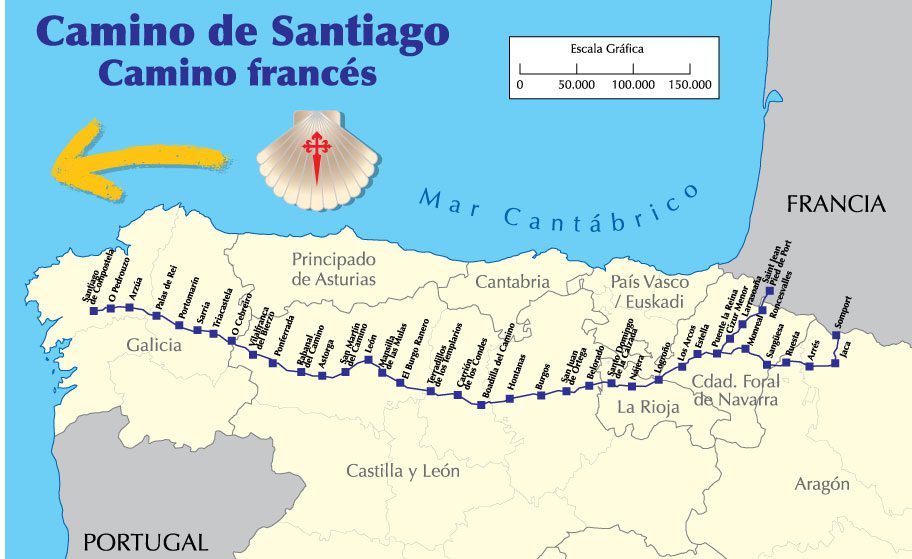
In 2018, Leslie walked the Frances Way, which is the most heavily traveled camino. It starts in Saint-Jean-Pied-de-Port in France, and ends at the Cathedral in Santiago de Compostela in Galicia, Spain.
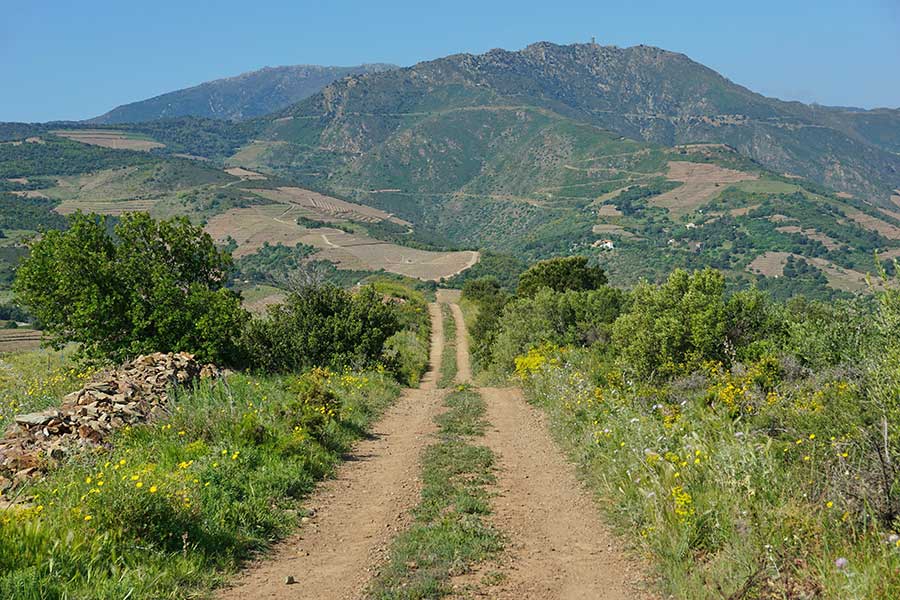
The Frances Way is 500 miles from start to finish, traversing the Pyrenees, and winding through many towns and villages along the way. It took Leslie 40 days to complete the walk.
Reasons People Walk “The Way”
If you ask 100 people why they walk the Camino de Santiago, you will get 100 different answers. It is a highly individual and personal journey. Leslie has several reasons for walking the Camino including supporting research for a way to radically improve early breast cancer detection, so MORE women with breast cancer become SURVIVORS.
The Scallop Shell
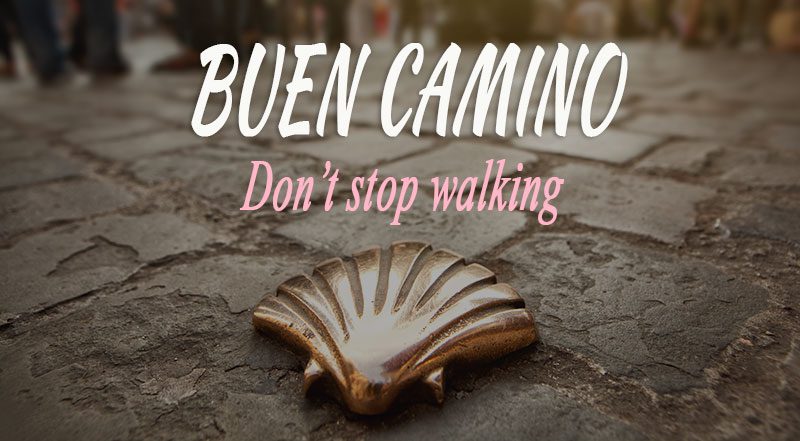
The scallop shell is the most prominent symbol of the Camino de Santiago. Most pilgrims will wear a shell somewhere on their backpack as they travel, and most all signs showing the direction of the trails will display a scallop shell. Many explanations exist about how and why the symbol came to be. One theory is that the lines on the shell represent the idea that the many roads of the Camino Santiago all lead to one place (the cathedral) at the base of the shell.
"The Way"
Camino de Santiago